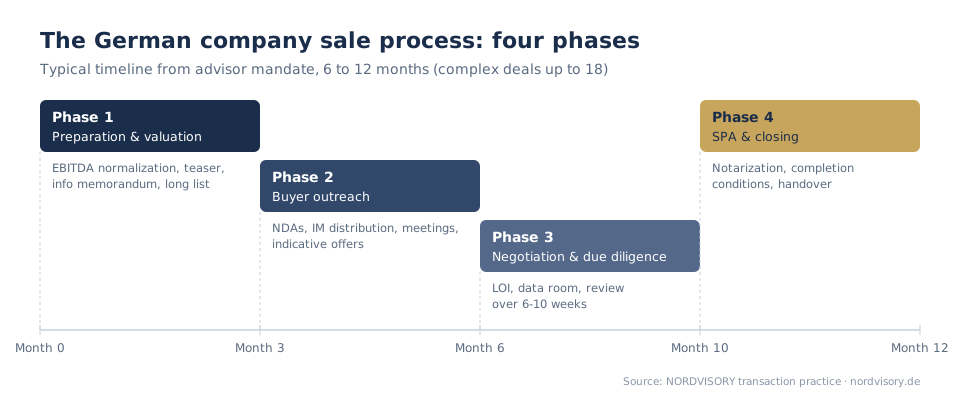
A structured sale of a German Mittelstand company runs through four phases: preparation and valuation, buyer outreach, negotiation with due diligence, and purchase agreement with closing. From advisor mandate to closing, expect six to twelve months, up to 18 for complex deals. Germany adds a few process specifics international parties should know early: GmbH share transfers require notarization, signing and closing are routinely separated by completion conditions, and sellers weigh employee continuity heavily when choosing between bidders.
Whether you're a German owner selling to an international buyer or an acquirer approaching the Mittelstand, the process mechanics decide as much value as the price negotiation itself. This guide walks through the standard sequence, phase by phase, with the points where German practice differs from what US or UK parties may expect.
The four phases at a glance
- Preparation and valuation (months 1–3): financials normalized, valuation corridor set, teaser and information memorandum drafted, buyer long list built.
- Buyer outreach (months 3–6): anonymous teaser, NDAs, information memorandum, management meetings, indicative offers.
- Negotiation and due diligence (months 6–10): preferred bidders selected, letter of intent, data room, financial/legal/tax/commercial due diligence.
- Purchase agreement and closing (months 10–12+): SPA negotiation, notarization, completion conditions, handover.
| Phase | Duration | Key output |
|---|---|---|
| 1. Preparation & valuation | 2–3 months | Teaser, information memorandum, long list, valuation corridor |
| 2. Buyer outreach | 2–3 months | Signed NDAs, indicative offers, bidder shortlist |
| 3. Negotiation & due diligence | 3–4 months | LOI, completed due diligence, confirmed offer |
| 4. SPA & closing | 2–3 months | Notarized SPA, conditions fulfilled, funds flow |
Phase 1: Preparation and valuation
German sellers' advisors normalize EBITDA before going to market: owner compensation above or below market rates, private expenses in the business and one-off items are adjusted in a documented bridge. Done properly, this routinely lifts reported EBITDA by 15 to 30 percent, and every adjustment must survive buyer scrutiny later. Valuation is anchored on multiples; for reference, the DUB KMU Multiples for Q2 2026 span 2.4x to 10.9x EBITDA across 20 industries and three size brackets, with most sub-€5m-revenue companies in the 4x to 6x range. Two documents carry the process: a one-to-two-page anonymous teaser and a 20-to-40-page information memorandum.
Phase 2: Buyer outreach
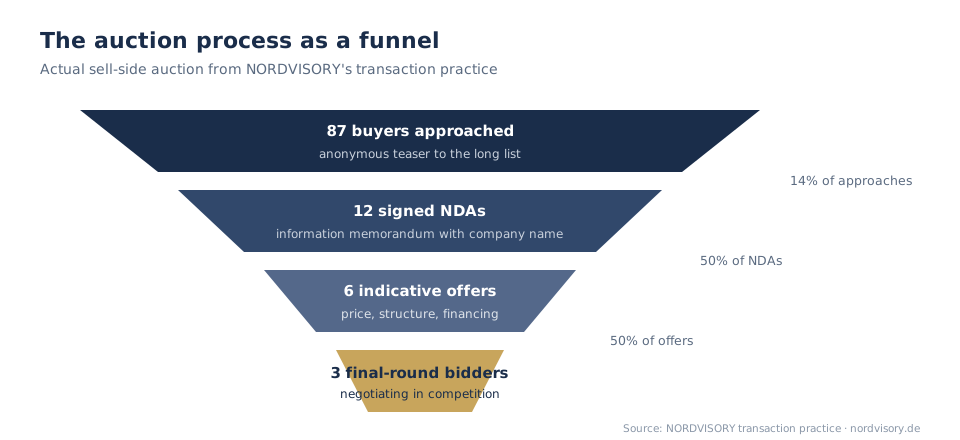
Outreach follows a strict confidentiality staircase: teaser first, NDA second, company name and information memorandum only after signature. A limited auction addressing 10 to 30 curated buyers is the Mittelstand standard; broad auctions reach 50 to 150. The funnel from one NORDVISORY-led auction shows the typical shape: 87 buyers approached, twelve NDAs, six indicative offers, three final-round bidders.
 For international acquirers, two practical notes: German owners respond poorly to cold outreach and unsolicited approaches, and proof of financing is checked early, not late.
Phase 3: Negotiation and due diligence
Indicative offers lead to a letter of intent with the preferred bidder, typically including a price range, structure and a time-limited exclusivity of six to ten weeks. The LOI is largely non-binding under German law (exclusivity and confidentiality clauses aside), but it frames everything that follows. Due diligence then runs through financial, legal, tax, commercial and increasingly IT workstreams over six to ten weeks. German data rooms are usually well-organized where sellers prepared early; gaps translate directly into price chips and expanded warranty catalogs.
Phase 4: SPA and closing, where Germany differs most
Three German specifics matter here:
- Notarization is mandatory for GmbH share transfers. The share purchase agreement for a GmbH must be recorded by a German notary, who reads the deed aloud in session. Budget time and cost for this, and expect the notary appointment itself to be a scheduling factor.
- Signing and closing are routinely separated. Completion conditions such as merger-control clearance or final financing commitments sit between signature and funds flow; days to months can pass in between.
- Employee continuity carries legal and cultural weight. In an asset deal, employment relationships transfer to the buyer by law (§ 613a BGB). Beyond the legal layer, German sellers regularly weigh a bidder's plans for the workforce and the company's independence when choosing between offers, sometimes above the last increment of price.
After closing, sellers typically stay on for a contractual handover of six to 24 months, and earn-out components keep them tied to results where agreed.
How long does it take, and what slows it down?
Six to twelve months from mandate is the norm, up to 18 for complex transactions. The avoidable delays are the same on every deal: incomplete data rooms, unresolved shareholder questions, tax structure issues surfacing at SPA stage, and bidders without committed financing. German market context adds urgency on the sell side: roughly 109,000 companies per year seek succession through 2029, per KfW Research, so seller-side competition is rising, and well-prepared processes stand out.
NORDVISORY runs partner-led sell-side processes for Mittelstand companies and regularly works with international acquirers. Get in touch for a confidential conversation.
FAQ
How long does it take to sell a company in Germany?
Six to twelve months from advisor mandate to closing is typical, up to 18 months for complex transactions. Preparation before the mandate (clean financials, reduced owner dependence) adds lead time and materially improves outcomes.
Is a letter of intent binding under German law?
Mostly not. The LOI documents price range, structure, timeline and exclusivity; apart from clauses like exclusivity and confidentiality, it doesn't oblige either side to complete. Its practical weight is high regardless: terms left out of the LOI are hard to win back later.
Why does a German GmbH sale require a notary?
German law requires notarial recording for the transfer of GmbH shares; the deed is read aloud by the notary at the signing session. This is a formal validity requirement, not a formality to skip, and it affects timeline and transaction cost planning.
What is the difference between signing and closing in German deals?
Signing is the notarized execution of the purchase agreement; closing is completion, when conditions such as antitrust clearance or financing confirmations are met and the purchase price flows. The gap ranges from days to months depending on the conditions.
What do German sellers look for in a buyer besides price?
Continuity. Plans for employees, the company name, the site and the management team regularly influence bidder selection, particularly in succession-driven sales. International buyers who address these points early and credibly improve their competitive position beyond the headline number.
Sources
- DIHK Succession Report 2025 (opens in a new tab)
- KfW Research, Succession Monitoring German Mittelstand 2025 (opens in a new tab) (Fokus Volkswirtschaft No. 526, January 2026)
- DUB KMU Multiples Q2 2026 (opens in a new tab) (German small-cap EBITDA multiples, 20 industries)
- NORDVISORY transaction practice (process metrics from an advised auction)
Legal note: NORDVISORY is an M&A advisory firm, not a law or tax firm. LOI and SPA drafting belong with your legal counsel; tax structuring with your tax advisor.
NORDVISORY is an independent M&A advisory firm based in Hamburg, advising Mittelstand owners on company sales and succession processes.
Related: Preparing a company sale · Taxes on selling a German company · Buy-and-build in the Mittelstand · Germany's closure wave